Space Conquest during the Cold War

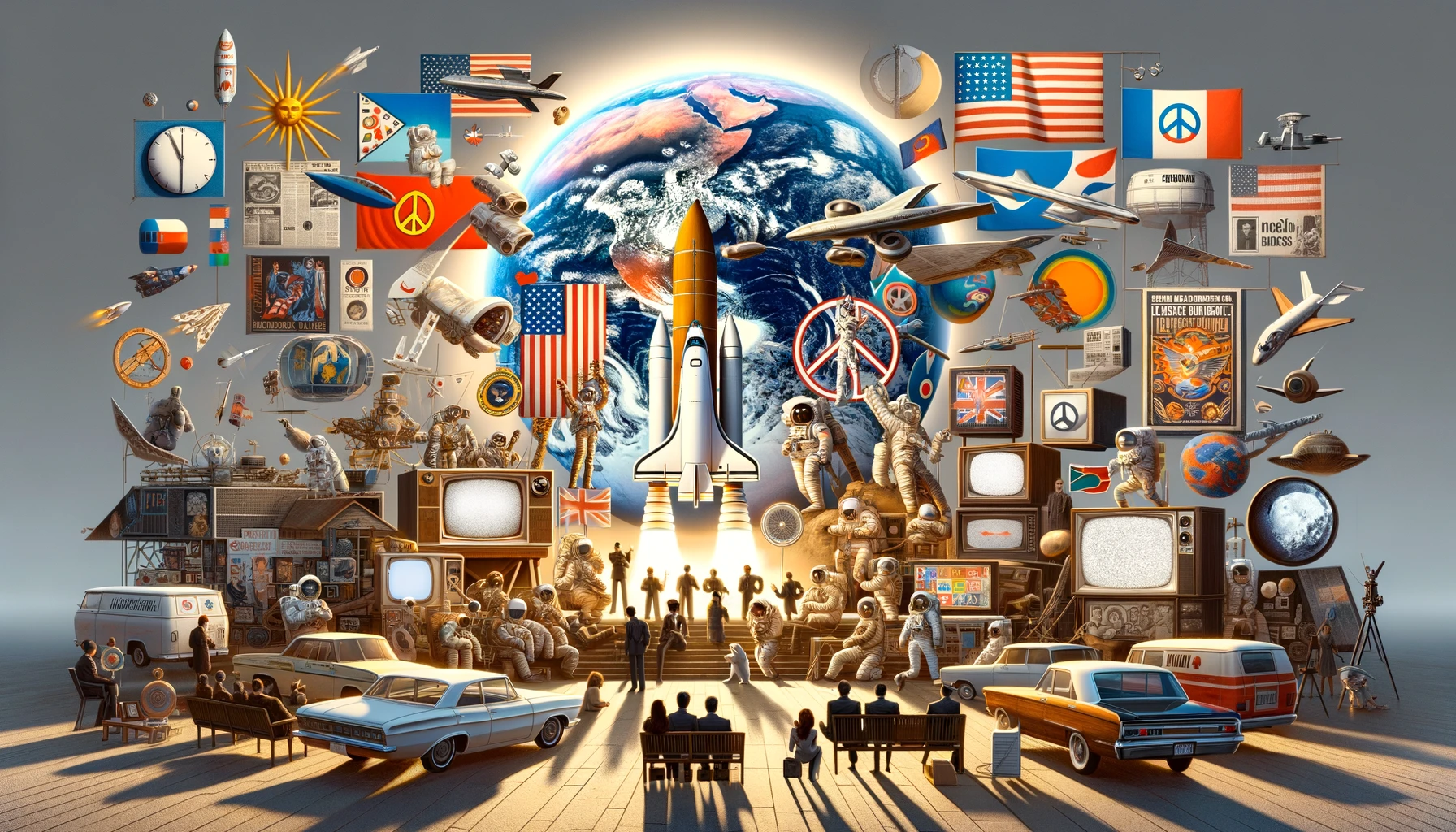
The Cold War, which lasted from 1947 to 1991, was dominated by an intense rivalry between the United States and the Soviet Union, profoundly impacting the technological and ideological advances of the era. At the heart of this confrontation, the conquest of space emerged as a crucial arena of competition, reflecting the struggle for technological and ideological superiority. Successes in space, from Sputnik to Apollo 11, were not only scientific feats but also powerful symbols of each superpower’s advancement and global influence. Thus, space exploration became a key element in the overall Cold War strategy, highlighting the importance of space in global power dynamics. In-Depth Historical Context In-Depth Historical ContextEven before the outbreak of the Cold War, early space exploration had already begun to lay the groundwork for the future of space travel. These initial experiments, although rudimentary, paved the way for humanity’s imagination and technical feasibility of crossing the limits of our atmosphere. The implementation of space programs by the United States and the Soviet Union in the years that followed transformed this aspiration into a full-fledged space race. Each superpower sought not only to prove its technological superiority but also to assert its ideology through spectacular space successes. The impact of World War II on the space race cannot be underestimated. Advances in rocket technology
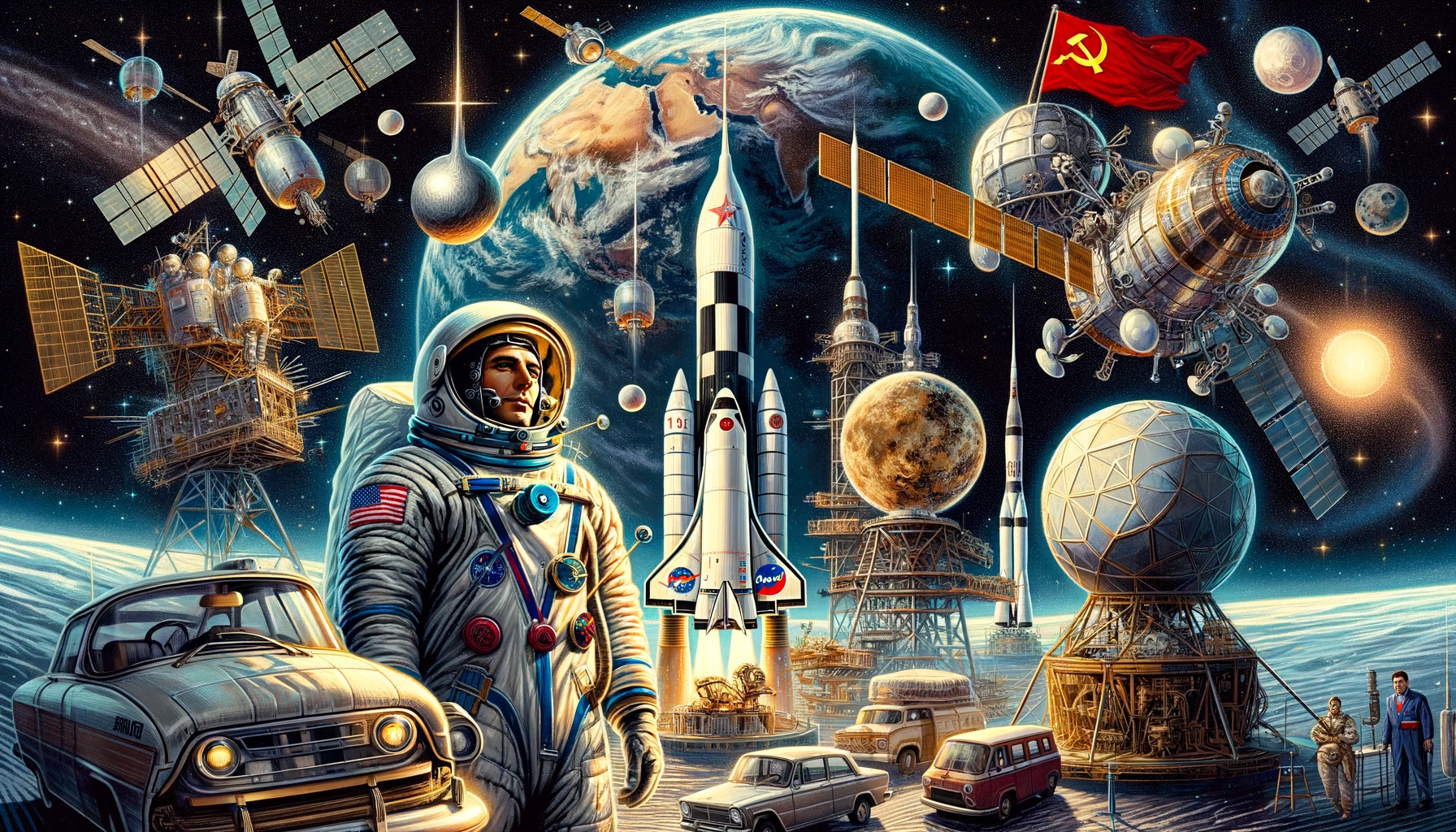
Initially motivated by military objectives, these efforts laid the scientific and technical foundations necessary for the conquest of space. Key figures, such as Wernher von Braun, played a pivotal role in transferring knowledge and expertise from a military context to the goal of peaceful space exploration. This period also saw the emergence of collaborations and competitions that defined the early decades of the Space Age. From satellites to human spaceflight, each new milestone represented a further step in demonstrating each nation’s technological capability and global influence. Soviet Successes Soviet Successes The launch of Sputnik in October 1957 represented much more than a mere technical feat; it symbolized humanity’s entry into the Space Age. This event not only demonstrated the Soviet Union’s ability to send objects into orbit around Earth, but also had a profound global impact, raising awareness of the possibilities of space exploration and intensifying the space competition with the United States.
When Yuri Gagarin orbited Earth in April 1961, he not only became the first man in space; he embodied the hope and potential of space exploration for humanity. This historic flight not only solidified the Soviet Union’s position as a leader in the space race, but also inspired a universal sense of wonder and aspiration, marking a pivotal moment in the history of space exploration with lasting cultural, scientific, and geopolitical repercussions. Subsequently, the Luna missions, with the first flyby of the Moon, and the manned flights of the Vostok program , continued to push the boundaries of what was technologically possible. Each successful mission not only strengthened human understanding of space but also served to illustrate the strength and technological advancement of the Soviet Union on the world stage. These feats, in addition to providing valuable scientific data, played a crucial role in demonstrating the viability of human life and work in space, laying the foundation for future space exploration and habitation. The American ResponseThe American Response
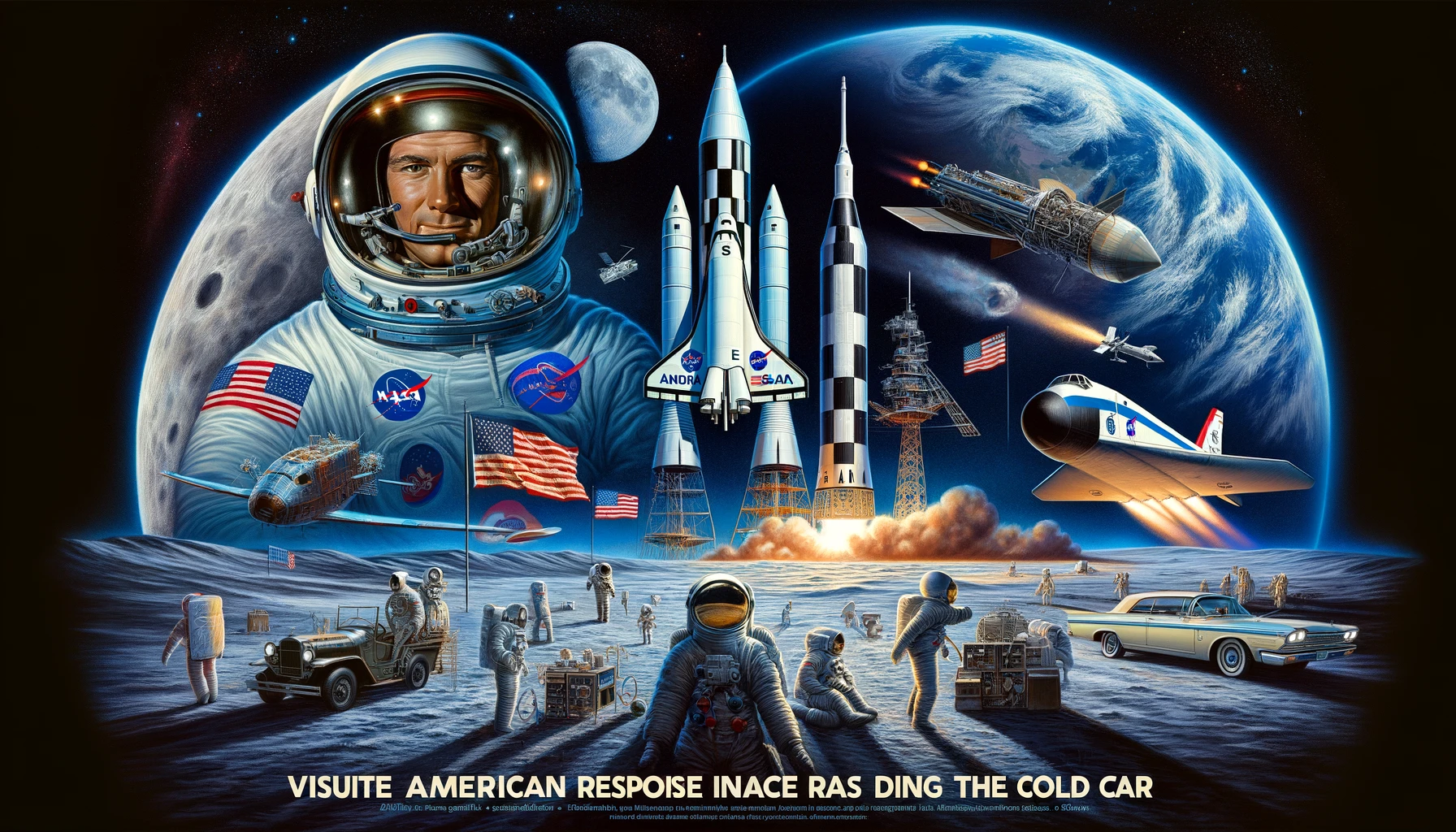
Faced with Soviet space successes, the United States responded by implementing strategic measures to regain lost ground. The creation of NASA in 1958 symbolizes this effort, marking a new era in the American space program. This organization, dedicated to space research and development, enabled a significant acceleration of American space projects, directing resources and talent toward achieving ambitious goals. Alan Shepard and John Glenn have become emblematic figures of the American response. Shepard, the first American to travel into space in 1961, and Glenn, the first American to orbit the Earth in 1962, embodied the United States’ revival and commitment to the space race. Their missions not only demonstrated America’s space capabilities but also rekindled national pride and confidence in the space program. The Apollo Programrepresents the pinnacle of this response, with President Kennedy’s ambitious goal of sending a man to the Moon and returning him safely to Earth. This mission, crowned with success with the landing of Apollo 11 on the Moon in 1969, not only proved the technological superiority of the United States but also marked a moment of historic triumph in the history of humanity. The accomplishment of this goal symbolized the realization of human potential and opened a new era of possibilities in space exploration. Technologies and Innovations

There
space race between the United States and the Soviet Union catalyzed a boom intechnological innovations remarkable, influencing space exploration and other scientific and technical fields. This period of intense competition necessitated the development of revolutionary technologies, advanced propulsion
to life support systems , having repercussions in various sectors.Technological Advances Generated by the Space Race The design of
resistant materialsat high temperatures for the heat shields of space capsules has found applications in industries aeronautics Andautomobile
. The technologies of propulsion developed for rockets have improved engine performance in many areas. The Impact on Other Scientific and Technical Fields The challenges of space exploration have spurred advances in
, THE
communications and the computer science . The need to manage vast amounts of data has accelerated the development of computers
more powerful and more sophisticated algorithms, laying the foundations of the current computing era. THE satellites communications systems have transformed telecommunications, enabling live television and systems
GPS .Contributions from Key Scientists In the United States, Wernher von Braun was instrumental in the development of rocket technology, while in the Soviet Union, Sergei Korolev was the driving force behind early space successes, including the launch of Sputnik and Gagarin’s flight. Their contributions were fundamental to the advancement of space exploration.Thus, the Space Race marked a period of technological advances that far exceeded the initial goal of space exploration, positively impacting society and inspiring future generations to continue exploring the unknown.
Political and Cultural Implications
Space exploration served as a powerful propaganda tool during the Cold War, with each superpower using its successes to demonstrate its technological and ideological superiority. These space exploits had a significant impact on international relations, contributing to both competition and détente between the United States and the Soviet Union. Space Conquest as a Propaganda Tool Space achievements were widely publicized and celebrated as evidence of the superiority of each country’s sociopolitical model. The Soviet Union’s launch of Sputnik and the United States’ landing of Apollo 11 on the Moon became symbols of its power and technological advancement. Impact on International Relations and Détente These space competitions also paved the way for space cooperation initiatives, such as the Apollo-Soyuz program, which marked a significant moment of détente and collaboration between the two superpowers. These joint efforts demonstrated that despite their differences, nations could work together to achieve common goals in space. Space Conquest in Popular Culture
Space exploration has profoundly influenced popular culture, inspiring a multitude of films, books, and works of art. Films like « 2001: A Space Odyssey » and TV shows like « Star Trek » have captured the public’s imagination, reflecting the hopes and fears associated with space exploration. Science fiction literature has also flourished, with authors like Arthur C. Clarke and Isaac Asimov exploring the possibilities of space exploration. Thus, space exploration has left an indelible mark not only on political and scientific levels, but also on the hearts and minds of people around the world, shaping society’s aspirations and reflecting the concerns of the times. Legacy and Consequences Legacy and Consequences The
legacy of the Space Race far transcends Cold War rivalries, having laid the foundations for an era of unprecedented international space collaboration. This period of intense competition not only led to remarkable technological advances but also indelibly shaped the collective imagination, influencing human aspirations for exploration and discovery. Implications for Post-Cold War International Space Collaboration
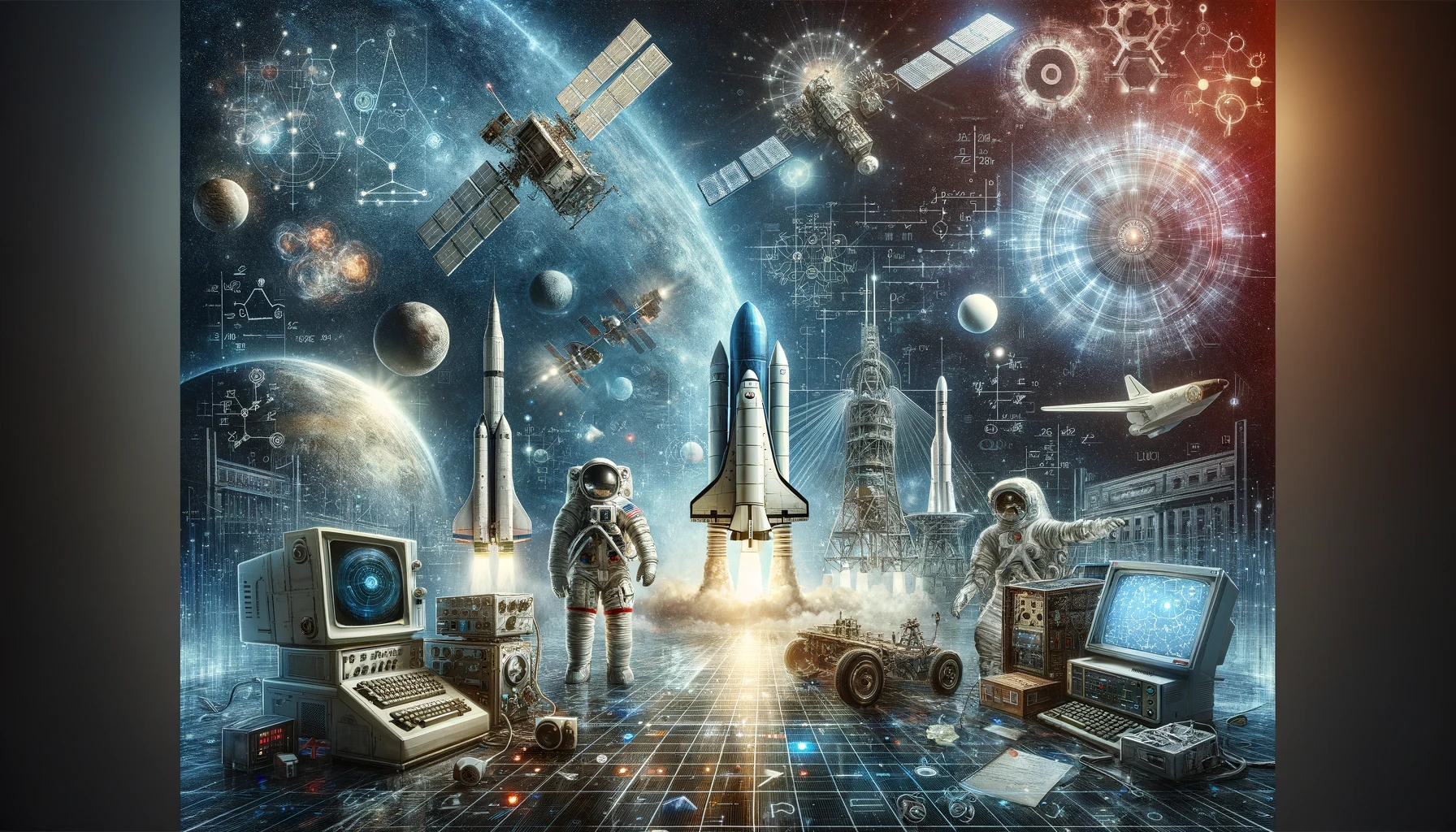
The expertise and technologies developed during the Space Race continue to inform and inspire current and future space missions.
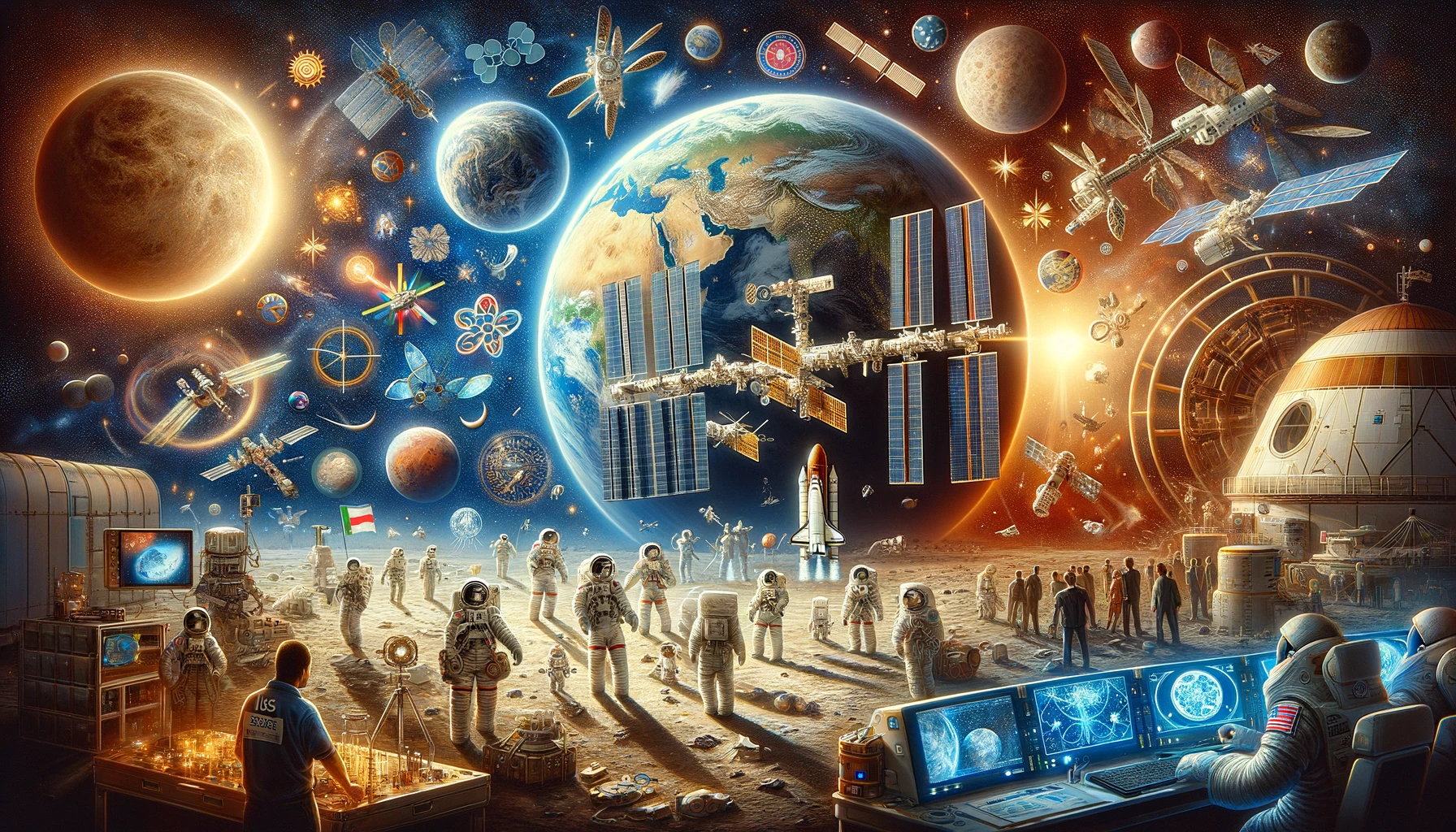
Ambitious projects such as the exploration of Mars and the return of man to the Moon are directly linked to the knowledge and innovations resulting from this period. Space exploration continues to evolve, with increasingly bold goals that build on the legacy of the space race. Reflections on How the Conquest of Space Shaped the Collective Imagination and Human Aspirations The conquest of space has profoundly influenced our culture and aspirations, pushing us to dream beyond the limits of our world. Space has become a symbol of human ingenuity and our relentless quest for knowledge. Images of Earth from space have contributed to a global awakening, highlighting our shared vulnerability and the importance of caring for our planet.In Conclusion The Space Race during the Cold War was much more than just a competition between the United States and the Soviet Union; It marked a turning point in human history, revealing our ability to explore beyond the confines of our planet. This period not only generated significant technological advances but also shaped international politics, popular culture, and our collective aspirations. Summary of Key LessonsEfforts to reach space have shown that, despite ideological differences, international cooperation is possible and beneficial for all of humanity. The space race also underscored the importance of science and technology as vectors of progress, paving the way for innovations that have improved life on Earth in many areas.
Reflecting on the Significance of the Conquest of Space for Humanity and its Future
Space exploration continues to represent an ideal of exploration and discovery, reminding us of our place in the universe and our responsibility to our planet. Future challenges in space exploration, such as the exploration of Mars and the sustainability of human life in space, offer opportunities to further strengthen our international collaboration and commitment to innovation. Further Reading For those interested in exploring this fascinating topic further, here are some suggestions: Books: « The Right Stuff » by Tom Wolfe, a captivating exploration of the American Mercury space program. « Rocket Men » by Robert Kurson, on the story of the Apollo 8 mission.Documentaries: « For All Mankind » (1989), which uses actual NASA footage to tell the story of the Apollo missions. « Cosmos: A Spacetime Odyssey, » a documentary series exploring the history and future of scientific exploration, including space. Online Resources:
NASA’s website ( www.nasa.gov ) for the latest space news and images.
« SpaceX’s Mars Plan » on the SpaceX website for those interested in future manned missions to Mars.Space exploration, which began as a Cold War battleground, remains a powerful symbol of what humanity can accomplish when we transcend our differences to explore the unknown and address common challenges. It continues to inspire, educate, and bring people together around a common goal of exploration and discovery.